
 Save to everydaypinmeals
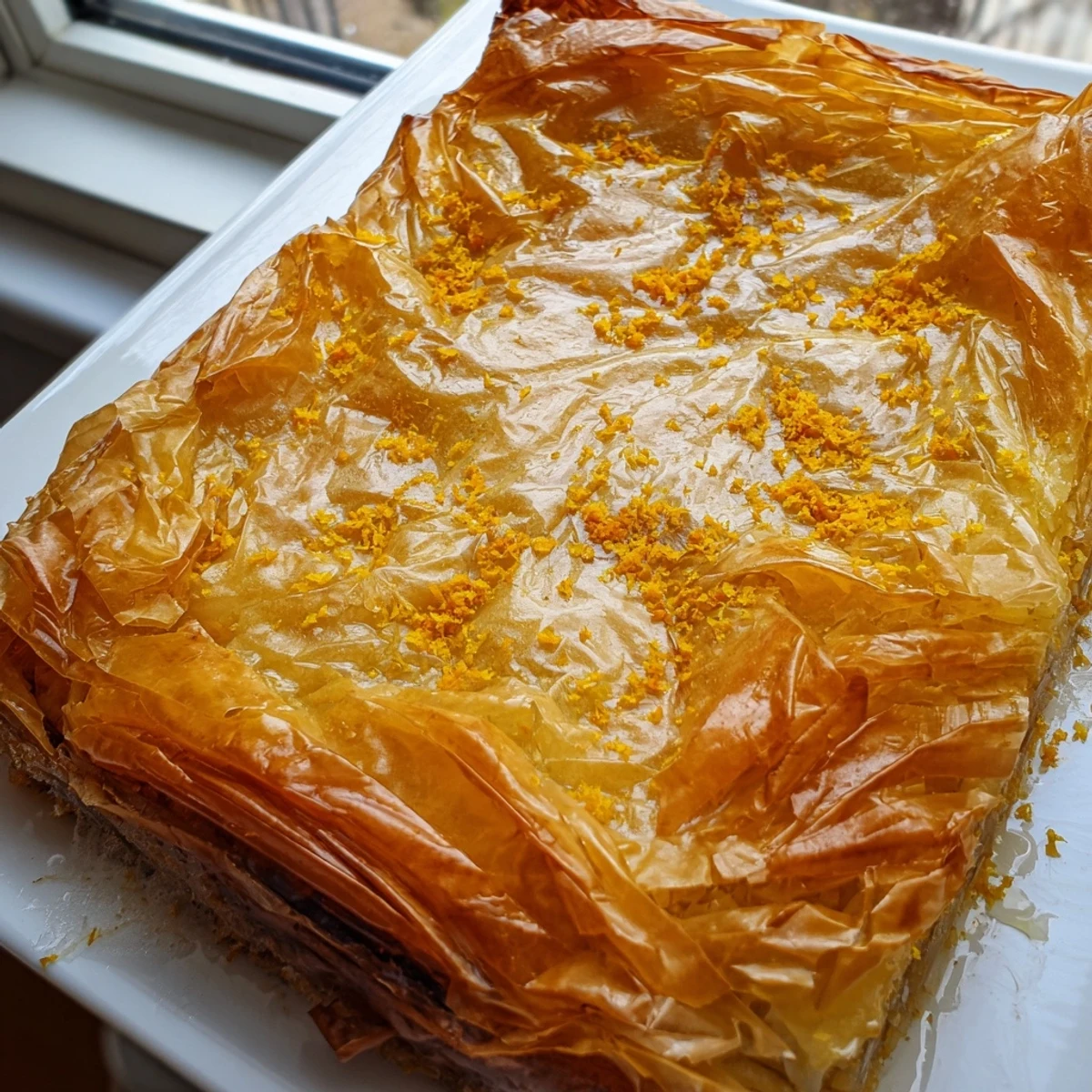
 Portokalopita stands as one of Greece's most cherished sweets, transforming simple phyllo dough into an extraordinary citrus-infused masterpiece. The magic lies in the unique preparation: phyllo sheets are deliberately dried, crumpled, then folded into a rich yogurt-egg batter before baking to golden perfection. While still hot from the oven, the cake receives a generous pour of cooled orange-cinnamon syrup, absorbing every drop of fragrant sweetness.
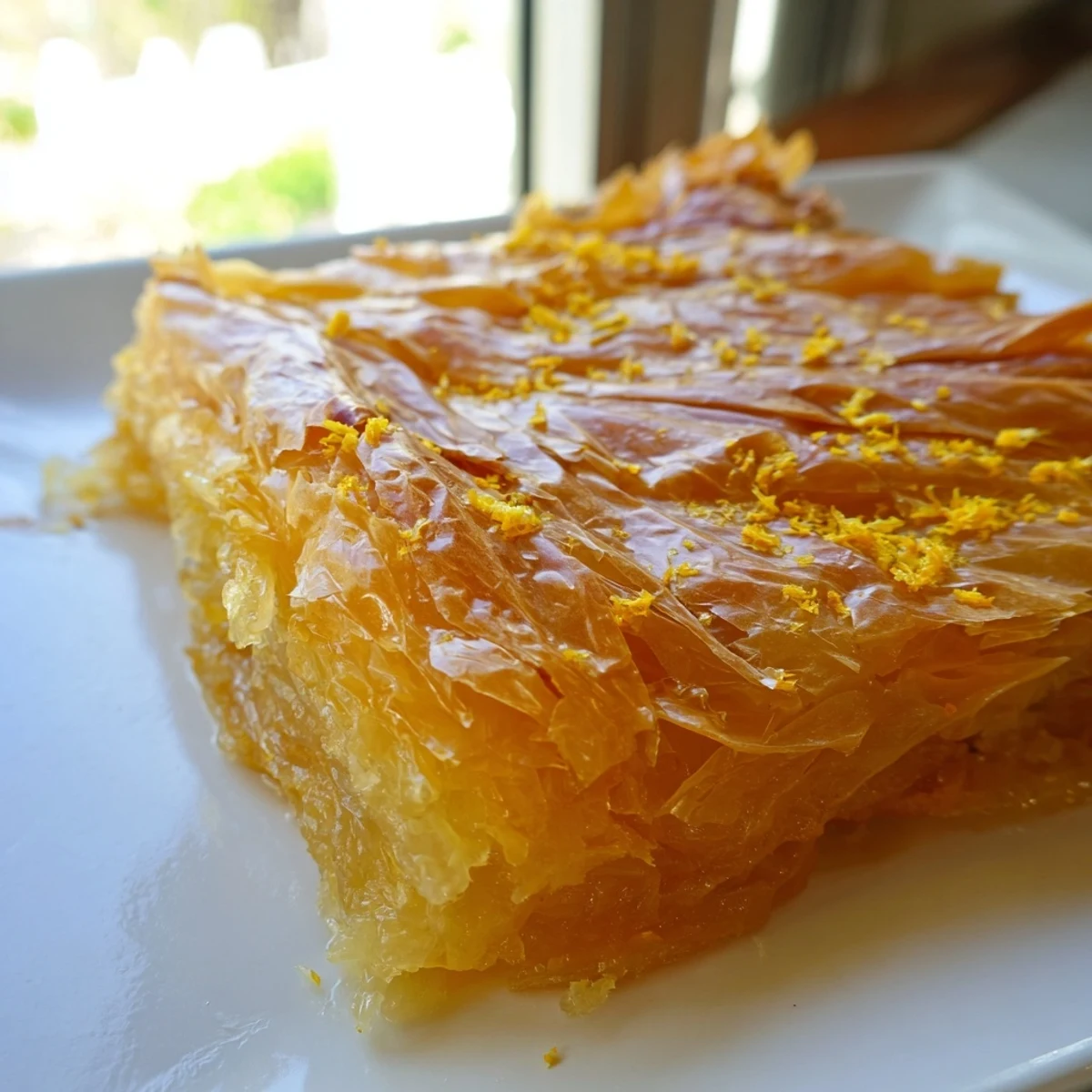
The result is a stunning contrast of textures—crispy, caramelized edges giving way to tender, syrup-soaked layers with bright orange essence throughout. This dessert perfectly exemplifies Greek pastry philosophy, where the interplay of crisp phyllo and sweet syrup creates something greater than the sum of its parts.
The first time I encountered portokalopita was in a tiny Athens bakery where the owner's grandmother insisted I taste her 'orange cake' even though I was already stuffed from lunch. One forkful of that citrus-soaked, syrup-drenched perfection and I completely understood why Greek grandmothers guard these recipes like family heirlooms. The way the crispy phyllo transforms into something tender yet structured in the hot syrup is nothing short of magic.
Last winter my sister came over during a snowstorm and we made this together, slightly tipsy from wine she'd brought, laughing as we aggressively crumpled phyllo sheets like disgruntled chefs. The house smelled so incredible while it baked that our neighbor actually knocked on the door to ask what we were making. We ended up sending her home with a slice, still warm from the oven.
Ingredients
- Phyllo sheets: Letting them dry out for an hour seems counterintuitive but this is the secret to getting those crispy crumpled layers that soak up syrup beautifully
- Greek yogurt: Full fat is non negotiable here it adds this incredible tang and moisture that makes the cake tender without being dense
- Orange zest: Use a microplane and really get into those oranges the oils in the zest are where all the intense orange flavor lives
- Cinnamon stick: Just one stick in the syrup gives this warm background note that makes people ask whats your secret ingredient
- Baking powder: Even though it seems like a small amount this helps the cake puff slightly between all those crumpled phyllo layers
Instructions
- Preheat your oven to 180°C (350°F) and grease a 23x33 cm baking dish:
- I rub a little olive oil all over the dish with a paper towel nothing sticks and it adds a subtle richness
- Let your phyllo dry out for 1 hour then crumple:
- Spread the sheets out and let them get slightly dry then scrunch them up like you're making paper balls the more irregular the better
- Whisk eggs and sugar until pale and thick:
- This takes about 3 to 5 minutes by hand longer if you want an arm workout the mixture should look almost creamy
- Add yogurt oil vanilla orange zest and baking powder:
- Whisk everything until completely combined the batter will be thick and creamy smelling like orange heaven
- Fold in the crumpled phyllo pieces:
- Gently toss those crumpled phyllo sheets in the batter until every piece is coated but not soggy some crispy bits should still show
- Pour into the prepared dish and smooth the top:
- Dont press it down too hard just level it so it bakes evenly the pieces should still look somewhat fluffy and loose
- Bake for 40 to 45 minutes until golden:
- The top should be a gorgeous golden brown and a skewer inserted in the center should come out clean
- Make the syrup while the pie bakes:
- Combine water sugar orange juice cinnamon stick and orange zest in a saucepan bring to a boil then simmer for 8 minutes
- Cool the syrup completely before using:
- This is crucial hot syrup on hot cake equals soggy mess let it reach room temperature
- Pour the cooled syrup over the hot pie:
- Go slowly and let the cake drink it in making sure to cover every inch even the corners
- Let it soak for at least 2 hours:
- Walking away is the hardest part but those phyllo layers need time to soften and absorb all that orange liquid gold
 Save to everydaypinmeals
 My yiya (grandmother) would make this for Sunday family dinners and we'd all hover around the kitchen like vultures waiting for those two hours of soaking time to pass. Now whenever I bake it the smell alone transports me back to her tiny kitchen with the mismatched chairs and laughter echoing off the walls.
Making It Your Own
I've experimented with adding different citrus over the years and while nothing beats the classic orange version a blood orange portokalopita in winter is absolutely stunning. The ruby red syrup looks incredible against the golden cake and the flavor is slightly more floral and complex. Sometimes I'll add a splash of orange liqueur to the syrup for dinner parties it feels like a little secret between me and the dessert.
The Art of Syrup
Greek desserts taught me that syrup isn't just sweetener it's a preservative a flavor enhancer and a texture magician all in one. The cinnamon in this syrup might seem subtle but it adds this warm undertone that keeps the bright orange from being one note. I've found that simmering the syrup for exactly 8 minutes gives it the perfect consistency not too thin not too thick just right for that slow absorption.
Serving and Storage
This cake actually gets better after a day or two in the refrigerator as the flavors deepen and the texture becomes even more custard like. I serve it slightly chilled with a dollop of unsweetened whipped cream to cut through the sweetness though my husband eats it straight from the fridge at midnight. It keeps for up to five days covered in the fridge if it lasts that long.
- Let it come to room temperature for 30 minutes before serving if you've stored it in the fridge
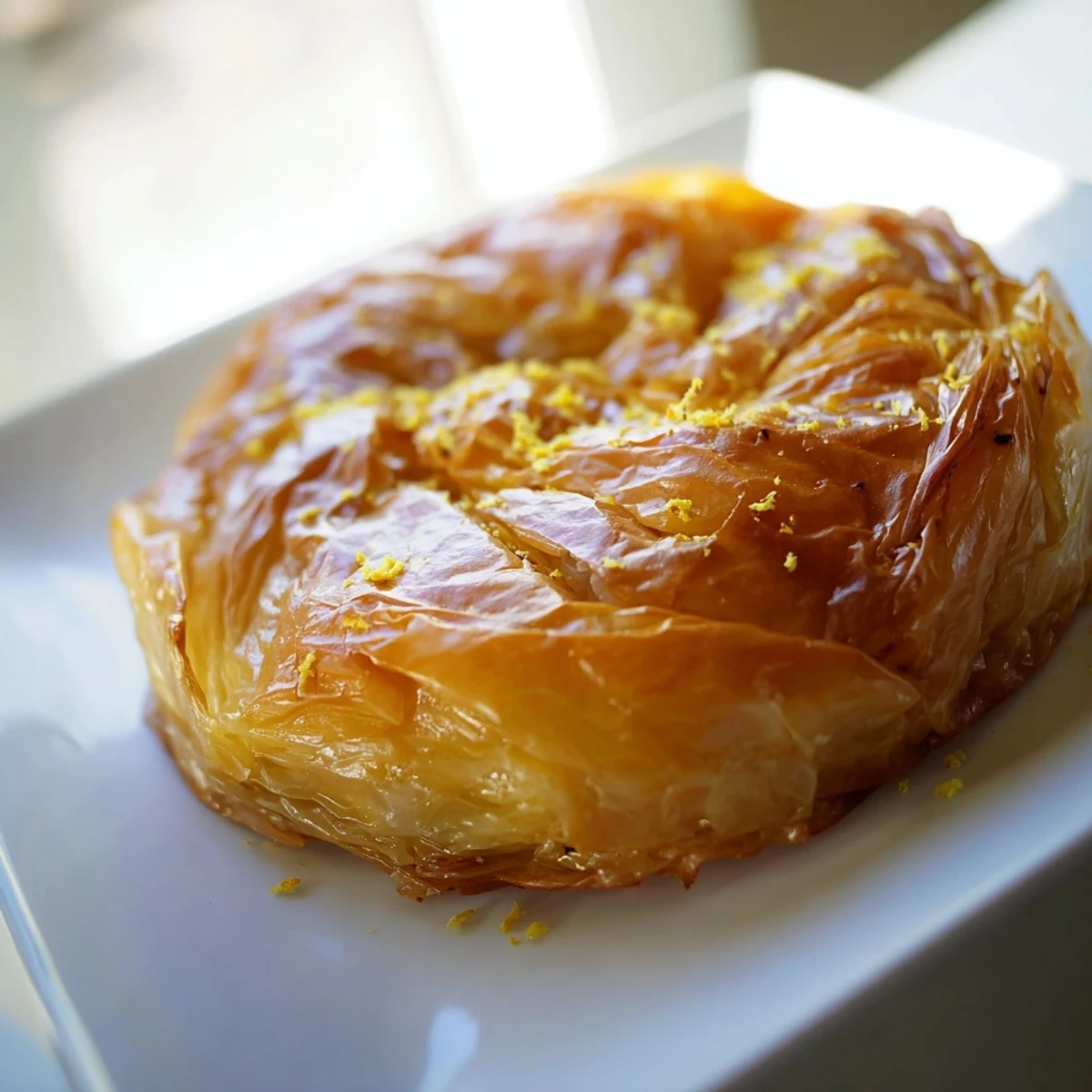
- A little extra orange zest sprinkled on top right before serving makes it look gorgeous
- The corner pieces are the most coveted because they get extra crispy edges
 Save to everydaypinmeals
 There's something deeply satisfying about a dessert that transforms simple ingredients into something so complex and comforting. This portokalopita has become my go-to for bringing people together one orange scented slice at a time.
Recipe FAQs
- → Why do phyllo sheets need to dry out before making Portokalopita?
-
Drying phyllo sheets for about an hour creates the ideal texture for this traditional dessert. The slight dryness allows the phyllo to crumple easily without tearing, creating those characteristic crispy, ruffled layers that absorb the orange syrup beautifully while maintaining structural integrity.
- → Should the syrup be hot or cold when pouring over the baked cake?
-
The syrup must be completely cooled before pouring. This temperature difference is crucial—hot syrup would make the phyllo soggy, while cooled syrup allows gradual absorption, creating those distinct crispy-tender layers. The hot cake and cool syrup work together to achieve perfect distribution without overwhelming the delicate structure.
- → How long should Portokalopita soak before serving?
-
Allow at least 2 hours for the syrup to fully absorb, though overnight refrigeration yields even better results. This resting period lets the flavors meld and the texture settle, transforming individual components into a cohesive, harmonious dessert with balanced sweetness throughout every layer.
- → Can I prepare Portokalopita in advance?
-
Absolutely! This dessert actually improves with time, making it perfect for preparing 1-2 days ahead. Store covered at room temperature for up to 3 days, or refrigerate for up to a week. The flavors deepen and the texture becomes more cohesive as the syrup continues to infuse the phyllo layers.
- → What makes Greek yogurt essential in this dessert?
-
Genuine Greek yogurt provides the signature creamy texture and subtle tang that balances the sweet syrup. Its thick, strained consistency creates a rich batter that coats the phyllo pieces evenly, while the natural acidity complements the bright orange flavors and prevents the dessert from becoming cloyingly sweet.
- → Can I add other flavors to the traditional syrup?
-
While the classic orange-cinnamon combination is time-honored, you can enhance the syrup with a splash of orange liqueur like Grand Marnier or Cointreau, add a few cloves for spice depth, or incorporate lemon zest for a more complex citrus profile. These variations should complement, not overpower, the dominant orange essence.