
 Save to everydaypinmeals
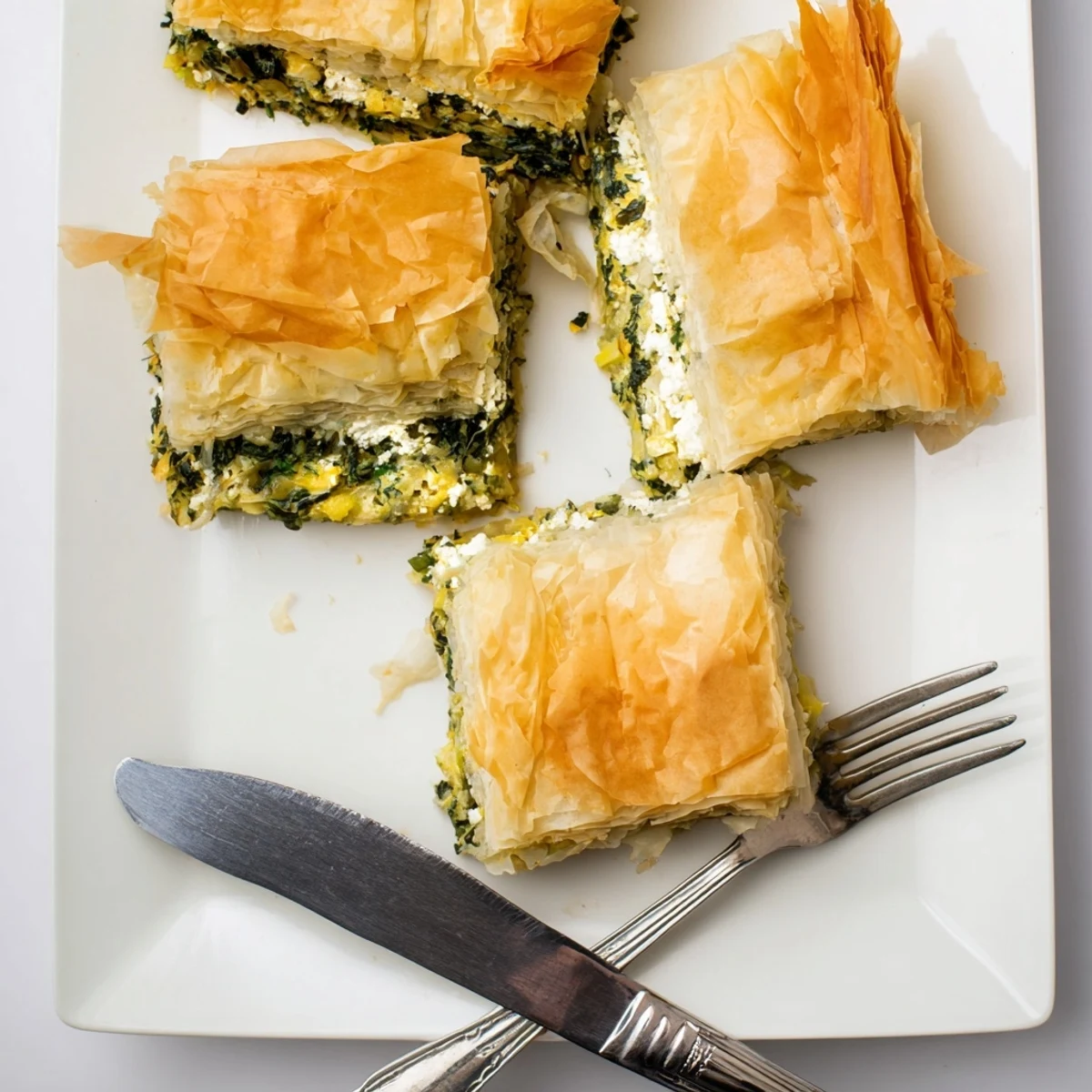
 This beloved Greek savory pie combines delicate, crispy phyllo pastry with a rich filling of fresh spinach, aromatic dill, parsley, and mint. The creamy blend of feta and ricotta creates a luscious texture, while layers of butter-brushed dough achieve that signature golden crunch. Perfect for gatherings, this traditional dish yields eight generous portions and can be prepared ahead. Serve warm alongside Greek salad and tzatziki, or enjoy at room temperature with crisp white wine.
The first time I watched my neighbor Maria make spanakopita, I was mesmerized by how she moved between the phyllo sheets and the spinach filling with such practiced ease. She told me the secret was patience and a light hand with the brush. Now whenever I catch that scent of buttery, herb-filled goodness wafting from my oven, I'm transported back to her sunlit kitchen in Athens.
I once made this for a potluck and watched three generations fight over the last corner piece. My friend's grandmother kept asking what my secret ingredient was, looking at me with suspicious admiration when I insisted it was just good feta and plenty of dill. Thats the thing about this pie—it somehow turns simple ingredients into something people remember.
Ingredients
- Fresh spinach: I've learned that fresh gives you better texture and flavor, though frozen works in a pinch if you squeeze it dry like your life depends on it
- Onions and spring onions: The combination creates layers of sweetness that balance the greens
- Fresh herbs: Dont skimp here—the dill, parsley, and mint are what make this taste like it came from a Greek taverna
- Feta and ricotta: The feta brings the tang and salt while ricotta adds that luxurious creaminess that binds everything together
- Phyllo dough: Keep it covered with a damp towel while you work or you'll learn the hard way how quickly it dries out
- Olive oil and butter: Using both gives you the flavor of butter and the crispy finish only olive oil can achieve
Instructions
- Get everything ready first:
- Preheat your oven to 180°C (350°F) and grease a rectangular baking dish. Mise en place matters here because once you start working with phyllo, you need to move quickly.
- Cook the aromatics:
- Warm some olive oil in a large skillet and sauté your onions until they're soft and translucent, then add the spring onions for just a couple minutes. You want them sweet, not browned.
- Wilt the spinach:
- Add the spinach in batches if you're using fresh, cooking until it wilts and the liquid evaporates. Stir in the herbs and let it cool slightly because hot spinach will scramble your eggs.
- Make the filling:
- Combine the feta, ricotta, eggs, salt, pepper, and nutmeg in a bowl, then fold in the cooled spinach mixture. Give it a taste and adjust the salt—remember the feta is already salty.
- Layer the bottom:
- Keep your phyllo covered with a damp towel while you work. Layer 6 to 8 sheets in the dish, brushing each one with olive oil or melted butter. Don't be shy with the brush.
- Add the filling:
- Spread the spinach mixture evenly over the phyllo base, taking it right to the edges.
- Top and finish:
- Layer the remaining phyllo sheets on top, brushing each with oil or butter. Tuck in the edges and give the top a final generous brush.
- Score and bake:
- Score the top into squares or diamonds with a sharp knife before baking. This helps with serving later and prevents the phyllo from tearing when you cut it. Bake for 45 to 50 minutes until deeply golden.
- The waiting game:
- Let it cool for at least 10 minutes before slicing. This resting period is crucial—it needs time to set so you get clean cuts instead of a messy slide.
 Save to everydaypinmeals
 This has become my go-to when I want to feed a crowd without spending my entire day in the kitchen. Last summer I made it for a beach picnic and my friends still talk about how perfectly it held up, staying crisp even after a couple hours in the cooler. There's something deeply satisfying about serving food that looks impressive but is actually quite straightforward.
Working With Phyllo
The thing that scares most people about phyllo is completely surmountable once you understand it. Treat it like delicate paper and move with confidence—hesitation is what leads to tears. I've found that room temperature phyllo is more forgiving than cold, so take it out of the fridge about an hour before you plan to start layering.
Make It Your Own
Sometimes I add a handful of chopped wild garlic or green garlic when it's in season, or swap some of the spinach for chard or beet greens. My neighbor Maria would shake her head at the variations, but honestly the spirit of the dish remains intact. Just keep the herb profile and cheese balance and you can't go wrong.
Serving & Pairings
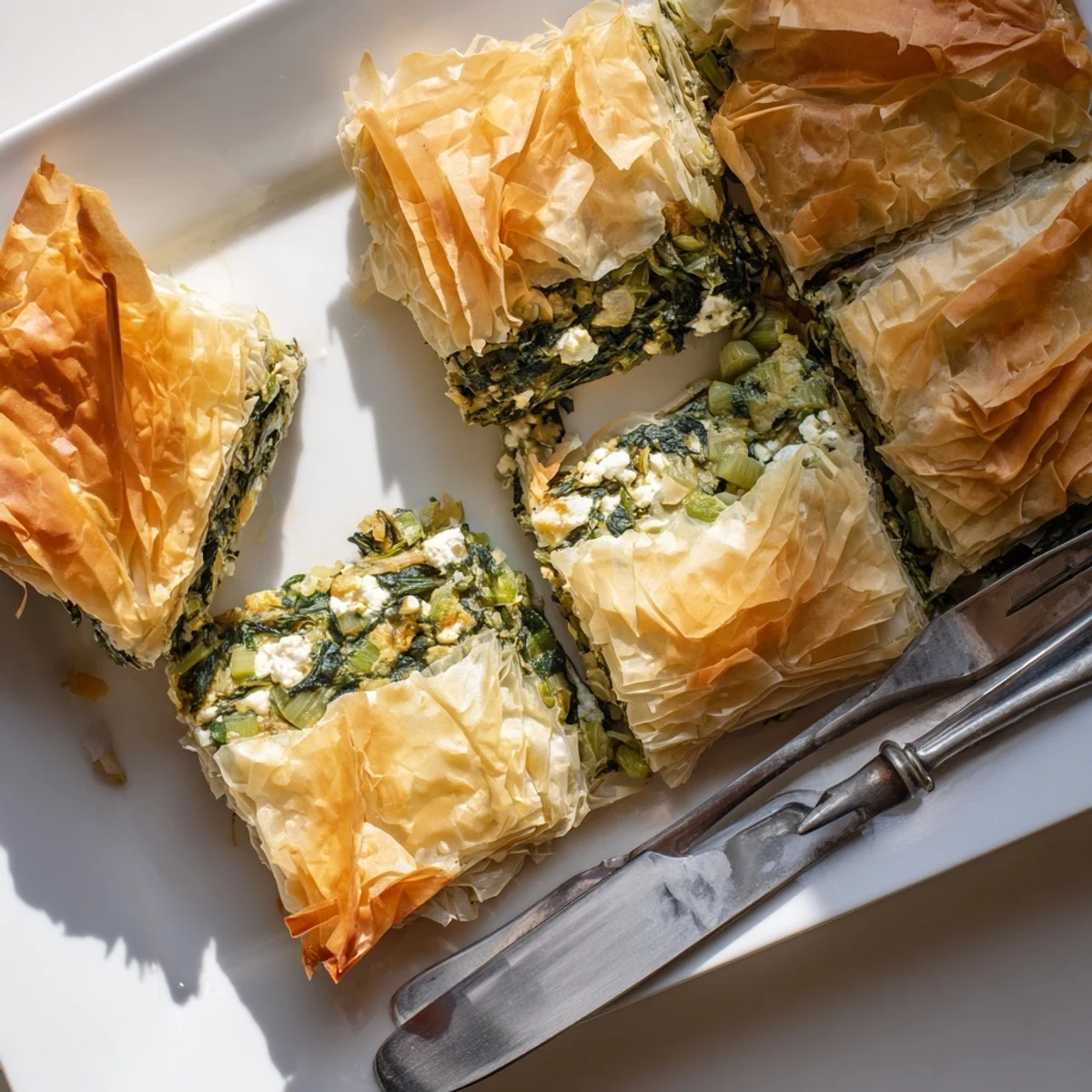
Spanakopita is endlessly versatile on the table. Serve it warm as a main with a big Greek salad, at room temperature as part of a mezze spread, or even cold for breakfast the next day. The leftovers reheat beautifully in a toaster oven, though I've been known to eat cold pieces straight from the refrigerator at midnight.
- A crisp white wine like Assyrtiko or Sauvignon Blanc cuts through the richness perfectly
- Keep some tzatziki nearby for dipping if you want extra creaminess
- Don't forget to serve with lemon wedges—the bright acid makes everything sing
 Save to everydaypinmeals
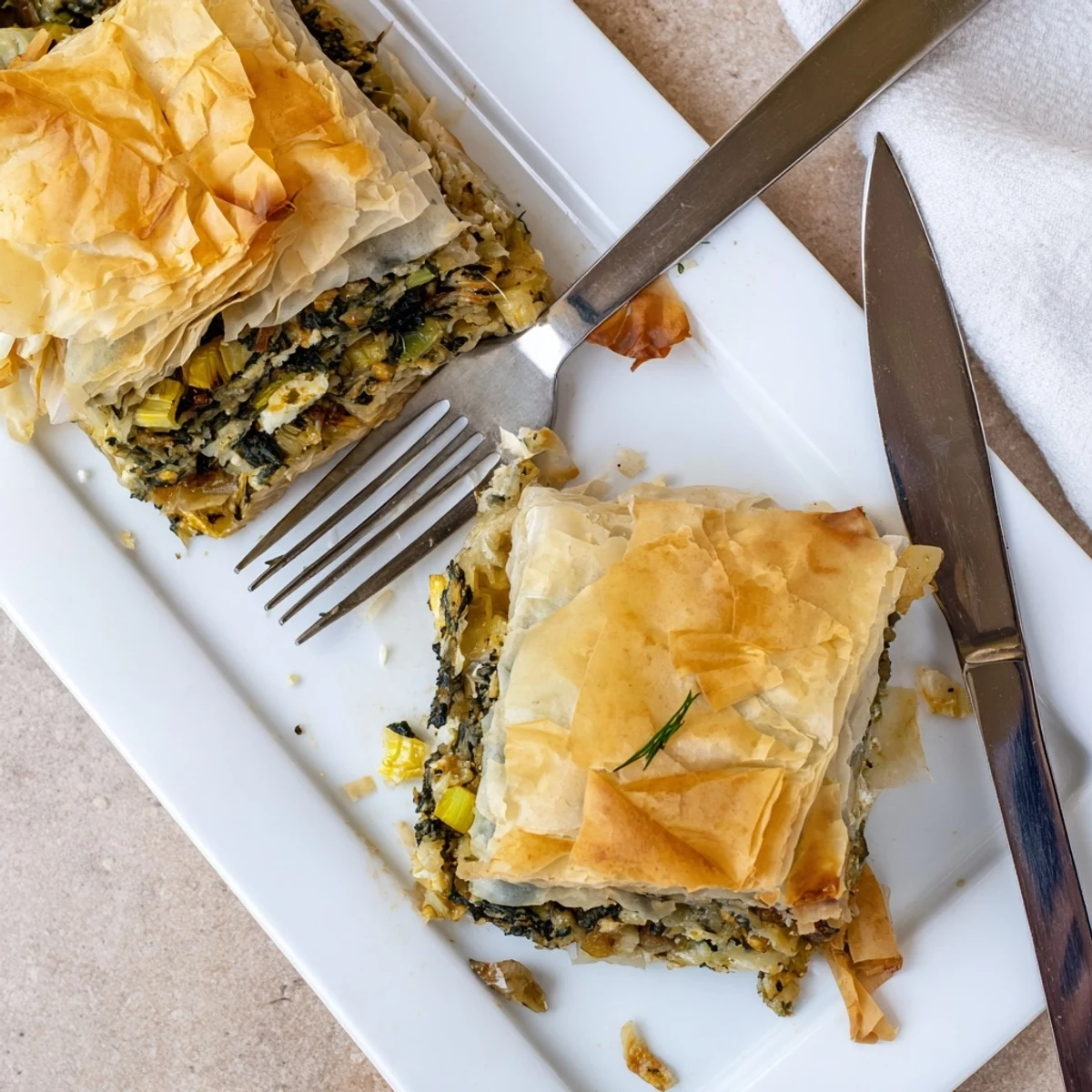
 Every time I pull a golden spanakopita from the oven, I'm reminded why some classics never fade. There's pure joy in that first crunch followed by the creamy, herb-filled center.
Recipe FAQs
- → Can I make spanakopita ahead of time?
-
Yes, prepare the filling a day in advance and refrigerate. Assemble and bake fresh, or freeze assembled unbaked spanakopita for up to 3 months.
- → How do I prevent soggy phyllo?
-
Thoroughly drain frozen spinach and cook fresh spinach until all liquid evaporates. Keep unused phyllo covered with a damp towel and brush each layer generously with oil-butter mixture.
- → Can I substitute the cheeses?
-
Ricotta can be replaced with anthotyro for authentic flavor. For a tangier version, increase feta proportion. Avoid pre-shredded cheeses as they lack proper melting properties.
- → What's the best way to cut spanakopita?
-
Score the top layers before baking using a sharp knife. Cut into diamonds or squares after cooling for 10 minutes—this allows the pastry to set and prevents crumbling.
- → How should I store leftovers?
-
Refrigerate in an airtight container for up to 3 days. Reheat at 180°C (350°F) for 10-15 minutes to restore crispiness. Freezing is not recommended as texture suffers.
- → Can I use fresh spinach instead of frozen?
-
Absolutely. Use 1 kg fresh spinach, washed and chopped. Cook in batches until wilted, then continue with the recipe. Fresh spinach offers a slightly brighter flavor.