
 Save to everydaypinmeals
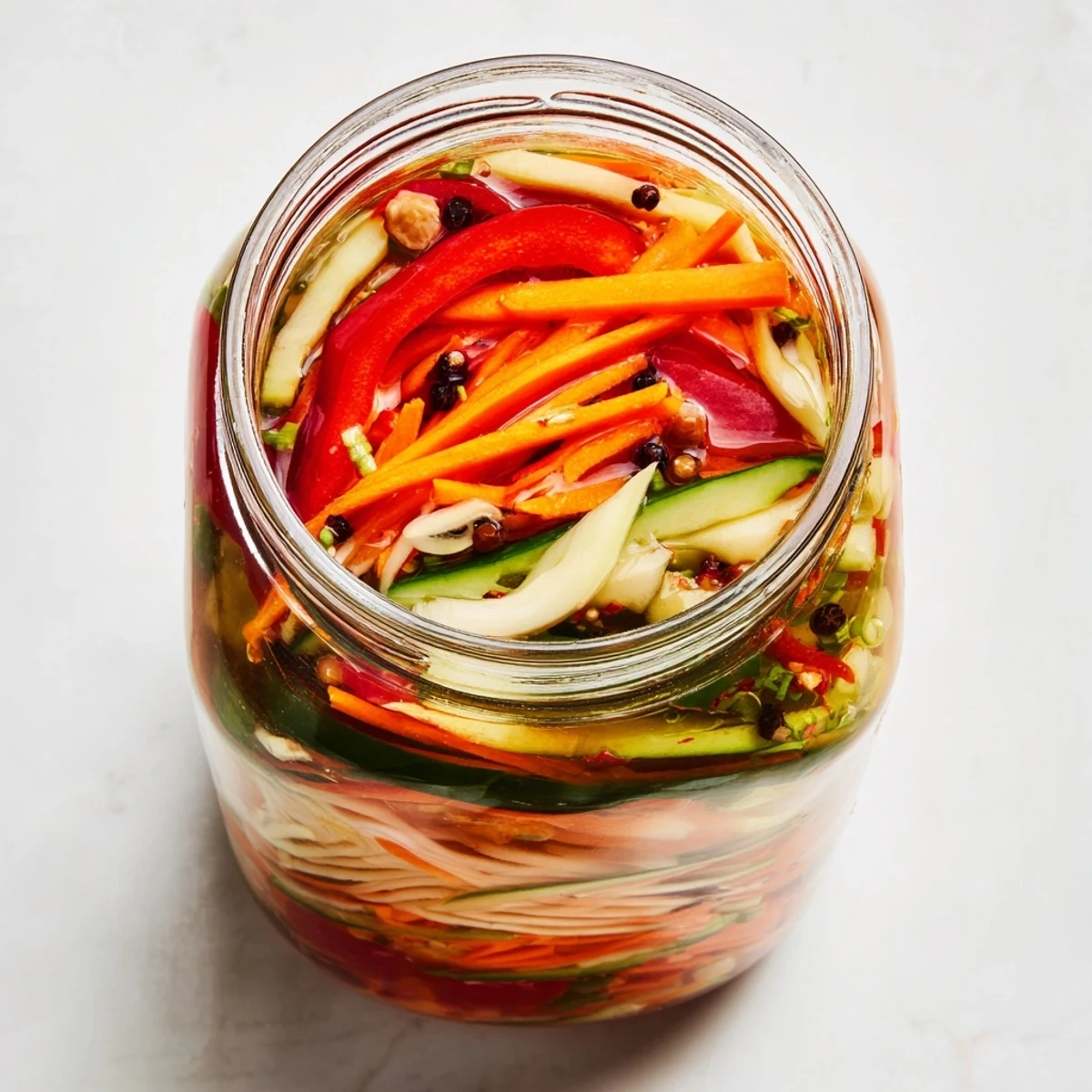
 This vibrant assortment combines crisp daikon radish, carrots, cucumber, and bell peppers in a balanced sweet-tangy brine. The quick-pickling process delivers that signature Vietnamese crunch in just hours, though overnight marinating deepens the flavors beautifully.
Perfect for banh mi sandwiches, rice bowls, or as a bright counterpoint to rich grilled meats. The versatile brine can be adjusted for sweetness or acidity to suit your taste.
Ready in about 30 minutes of active preparation, these pickles keep for up to two weeks in the refrigerator, making them an excellent make-ahead condiment for weeknight meals.
The first time I made these pickles, I was rushing to prepare a banh mi spread for friends arriving in less than an hour. My knife skills were clumsy, my julienne cuts more like rustic chunks, but somehow that imperfection made the final jar look invitingly homemade. Now I keep a quart in the fridge constantly, ready to rescue any meal that needs a bright, crunchy companion.
Last summer, my neighbor who swore she hated pickles ended up eating half a jar straight from my refrigerator while we talked on the porch. Something about the fresh crunch and gentle sweetness won her over completely.
Ingredients
- 1 medium daikon radish: This mild white radish provides the perfect crunch and absorbs the brine beautifully
- 2 medium carrots: Bring natural sweetness and that classic orange color pop
- 1 small cucumber: Adds a refreshing note and extra moisture to the mix
- 1 small red bell pepper: Thin ribbons of pepper make the jar look absolutely stunning
- 2 to 3 mild red chilies: Optional, but they add a gentle warmth that balances the sweet
- 1 cup rice vinegar: The cornerstone of Vietnamese pickling, mild and slightly sweet
- 1 cup water: Dilutes the vinegar to just the right tanginess
- 1/2 cup granulated sugar: Essential for that addictive sweet and sour profile
- 1 tablespoon kosher salt: Draws out moisture and enhances natural flavors
- 2 cloves garlic: Thin slices add subtle depth without overwhelming
- 1 teaspoon whole black peppercorns: Aromatic little dots of spice that infuse as they sit
Instructions
- Prepare your vegetables:
- Toss the julienned daikon, carrots, cucumber, and bell pepper with a tablespoon of salt and let them rest for 15 minutes to draw out excess moisture. Rinse thoroughly under cold water and drain well, pressing gently to remove any remaining water.
- Create the brine:
- Combine the rice vinegar, water, sugar, and salt in a small saucepan over medium heat, stirring until the crystals dissolve completely. Remove from heat and let it cool to room temperature while you finish prepping.
- Layer everything:
- Pack the vegetables into a clean quart jar, tucking in the chilies, garlic slices, and peppercorns as you go. Press down gently to eliminate any air pockets.
- Pour and seal:
- Carefully pour the cooled brine over the vegetables, making sure they are completely submerged. Seal the jar tightly and give it a gentle shake to distribute the aromatics.
- Wait patiently:
- Refrigerate for at least 2 hours, though overnight is better for fully developed flavors. These will keep happily in your fridge for up to two weeks.
 Save to everydaypinmeals
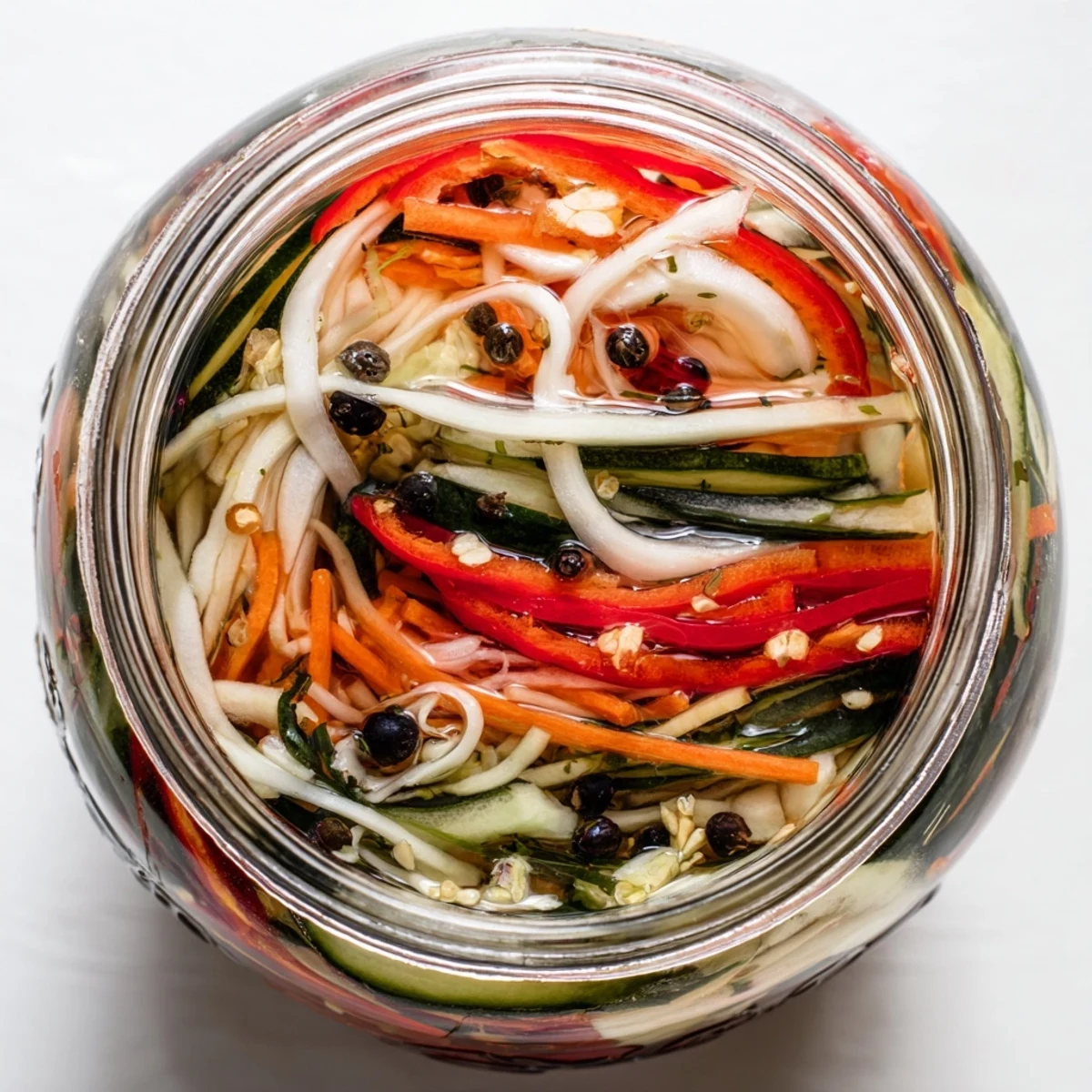
 These pickles became a regular part of my meal prep after I discovered how they transform a simple bowl of rice and eggs into something restaurant worthy.
Getting The Right Texture
I have found that the thickness of your julienne cut dramatically affects the final crunch. Too thin and the vegetables turn limp within days, too thick and they seem to take forever to absorb the brine properly. Aim for matchstick size about 2 inches long, and do not worry about perfection, uniform ingredients pickle more evenly but rustic cuts have character.
The Perfect Brine Balance
Every palate prefers slightly different levels of sweet and tangy, so consider the first batch an experiment. If you find yourself wishing for more brightness next time, bump up the vinegar by a tablespoon. Craving more sweetness, add another tablespoon of sugar. The beauty of this recipe is that once you find your personal ideal ratio, you will never need to buy pickles again.
Serving Ideas
These pickles shine brightest when they have a moment to come to room temperature before serving, which wakes up the aromatics and softens the vinegar edge just enough.
- Pile generously on banh mi sandwiches
- Stir into morning fried rice
- Serve alongside rich braised meats
 Save to everydaypinmeals
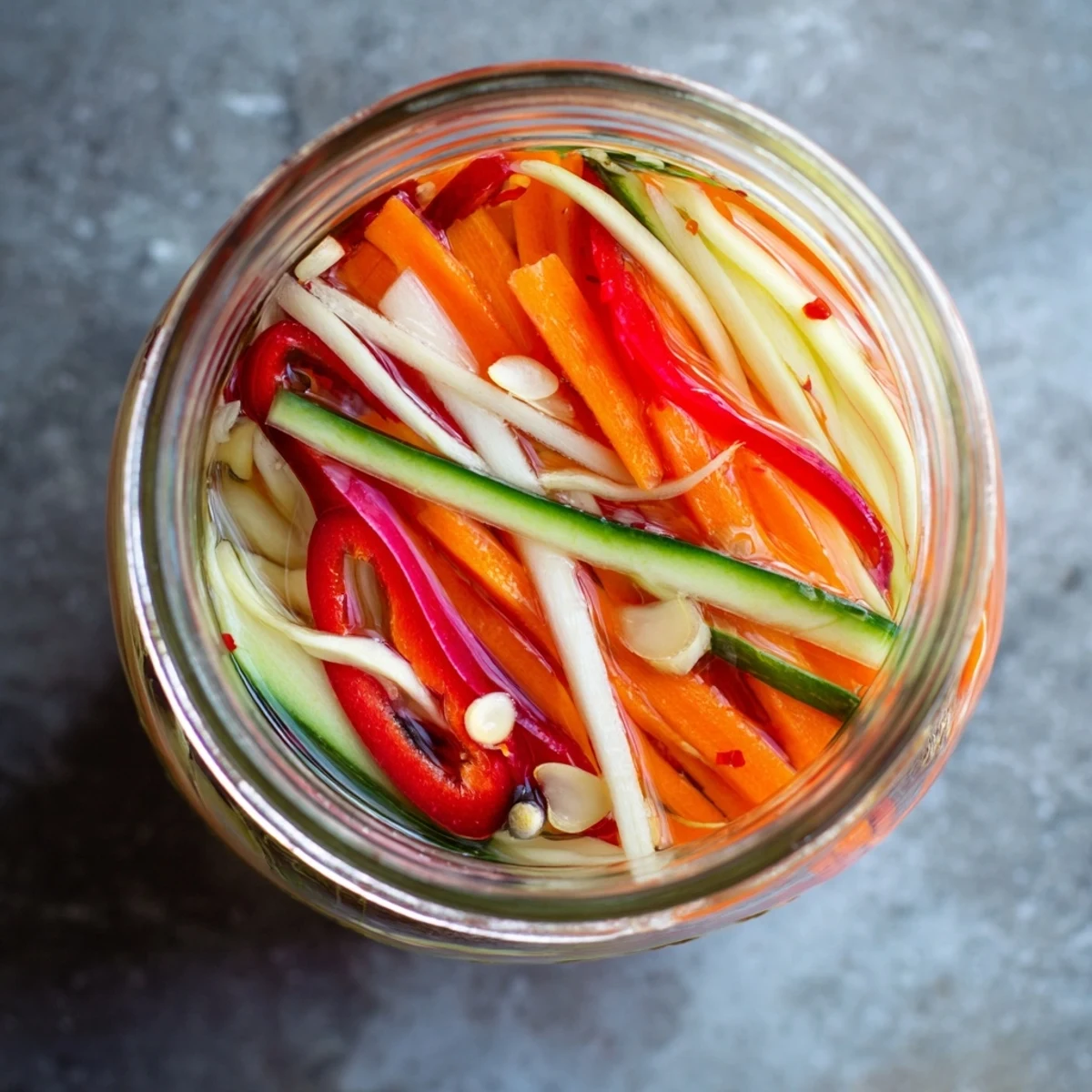
 There is something deeply satisfying about opening your refrigerator to see a jar of these glowing colors, knowing you have the secret ingredient to make any meal feel special.
Recipe FAQs
- → How long do these pickled vegetables last?
-
When stored properly in a sealed container in the refrigerator, these Vietnamese pickled vegetables stay fresh for up to two weeks. The vinegar brine naturally preserves the vegetables while maintaining their satisfying crunch.
- → Can I adjust the sweetness or tartness?
-
Absolutely. The brine ratio can be customized to your preference. Increase sugar for a sweeter profile or add more rice vinegar for extra tang. Taste the cooled brine before pouring over the vegetables to ensure it suits your palate.
- → What vegetables work best in this medley?
-
Traditional Vietnamese preparation uses daikon and carrots as the base. Cucumber and bell pepper add color and mild flavor. You can also incorporate green beans, cauliflower, or julienned kohlrabi for different textures and tastes.
- → Why should I salt the vegetables before pickling?
-
The pre-salting step draws out excess moisture from the vegetables through osmosis. This results in consistently crispier pickles and prevents the brine from becoming diluted. Rinse thoroughly after salting to remove excess sodium before pickling.
- → How soon can I eat these pickles?
-
Minimum marinating time is two hours for a lightly pickled result. For optimal flavor development and proper absorption of the brine, let the vegetables sit overnight. The flavors continue to deepen over the first few days in the refrigerator.
- → Can I use regular vinegar instead of rice vinegar?
-
Rice vinegar provides the most authentic mild flavor. White wine vinegar makes a decent substitute, though it's slightly sharper. Avoid distilled white vinegar as its harshness can overpower delicate vegetables. Apple cider vinegar works in a pinch but adds fruity notes.