
 Save to everydaypinmeals
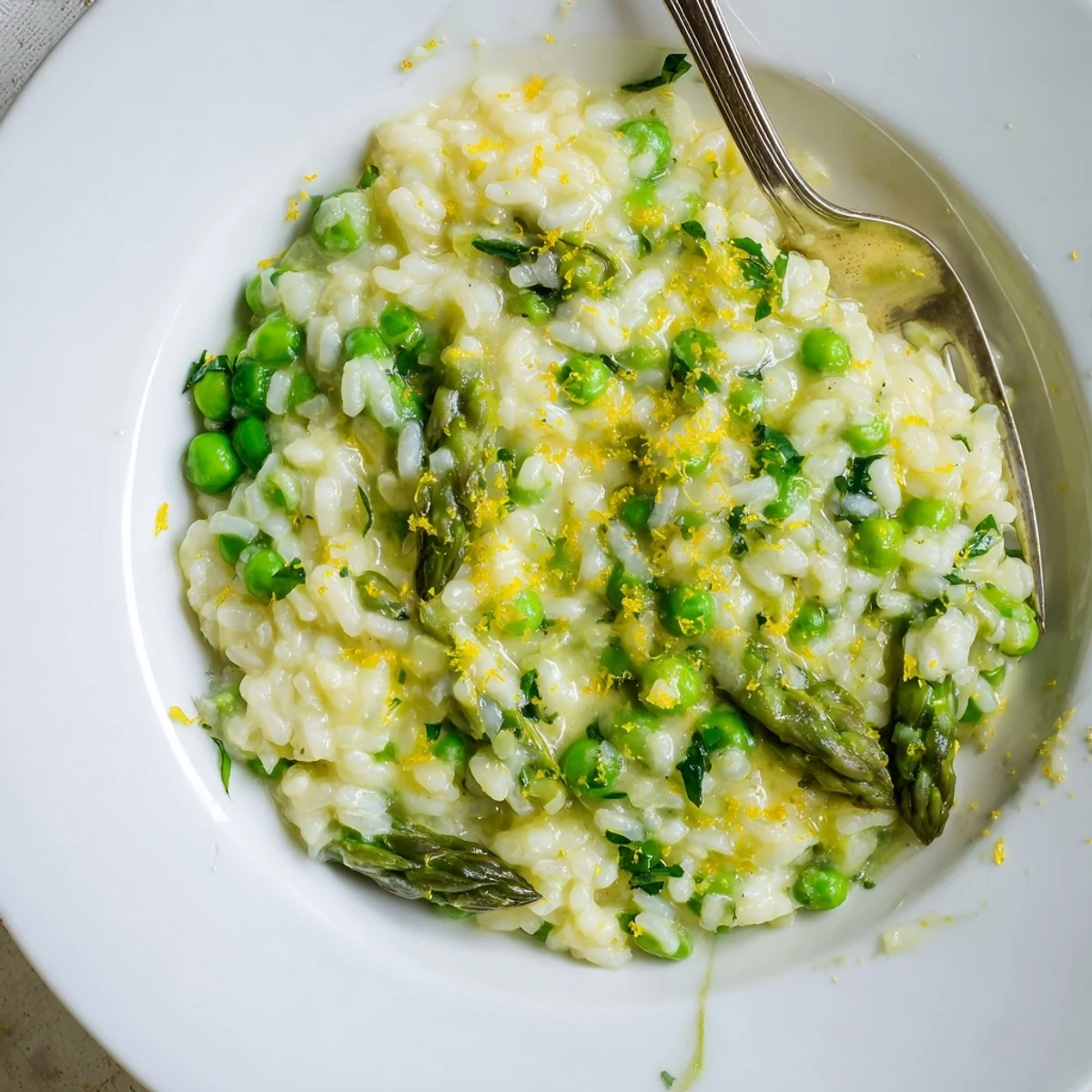
 This dish celebrates the bright flavors of spring with tender asparagus and sweet peas folded into creamy Arborio rice. Slowly cooked with white wine and vegetable broth, the risotto finishes with butter and freshly grated Parmesan for a luscious texture. Enhanced by lemon zest and fresh parsley, it offers a vibrant balance of freshness and richness. Ideal for a vegetarian main or side, it’s effortless to prepare and deeply satisfying.
The first time I made risotto properly was the Sunday my friend Sarah came over with fresh asparagus from her garden. She stood in my tiny kitchen watching me stir, explaining that her grandmother never used a timer. Something about the rhythm of adding broth and watching the rice transform felt meditative, like knitting but with better aromas. That afternoon taught me that good risotto is less about precision and more about patience and attention.
Last spring I made this for my parents who claimed they didnt like risotto because it was too heavy. Watching my dad take a third serving, declaring he might have been wrong about risotto his whole life, was honestly a kitchen victory. The vegetables keep it feeling light while still being deeply comforting food that hugs you back.
Ingredients
- Asparagus: Trim the woody ends and cut into bite sized pieces for even cooking
- Spring peas: Fresh peas are wonderful but frozen work perfectly when fresh arent in season
- Arborio rice: This short grain rice releases starch slowly creating that signature creamy texture
- Vegetable broth: Keep it warm in a separate pan so cold broth doesnt shock the rice
- White wine: Adds depth and acidity that cuts through the richness
- Lemon zest: The secret ingredient that makes everything taste alive and fresh
- Parmesan: Use freshly grated for the best melting and flavor
Instructions
- Get your broth warm:
- Pour the vegetable broth into a saucepan and bring it to a gentle simmer, then keep it warm over low heat while you cook the risotto.
- Build the foundation:
- Heat olive oil in a large heavy skillet over medium heat, cook the onion until translucent about 4 minutes, then add garlic for just one minute more.
- Toast the rice:
- Stir in the Arborio rice and cook for 2 minutes, letting the grains become slightly translucent and well coated with oil.
- Add the wine:
- Pour in the white wine and stir until its almost completely absorbed, letting the alcohol cook off and leaving behind its flavor.
- The patient stirring:
- Add warm broth one ladle at a time, stirring frequently and letting each addition absorb before adding more, continuing until rice is creamy and al dente about 18 to 20 minutes.
- Prep the vegetables:
- While rice cooks, steam asparagus pieces for 2 to 3 minutes until just tender, adding peas for the last minute, then drain and set aside.
- Bring it together:
- Stir the asparagus, peas, lemon zest, and parsley into the nearly finished risotto and cook for 2 more minutes.
- The luxurious finish:
- Remove from heat and stir in butter and Parmesan until melted and creamy, then season with salt and pepper to taste.
- Serve with love:
- Plate immediately while hot, garnished with extra parsley and grated Parmesan, and watch people smile.
 Save to everydaypinmeals
 This recipe became my go to for celebrating the first proper days of spring. Theres something about cutting bright green vegetables and stirring slowly that feels like an act of hope after a long gray winter.
Getting The Texture Right
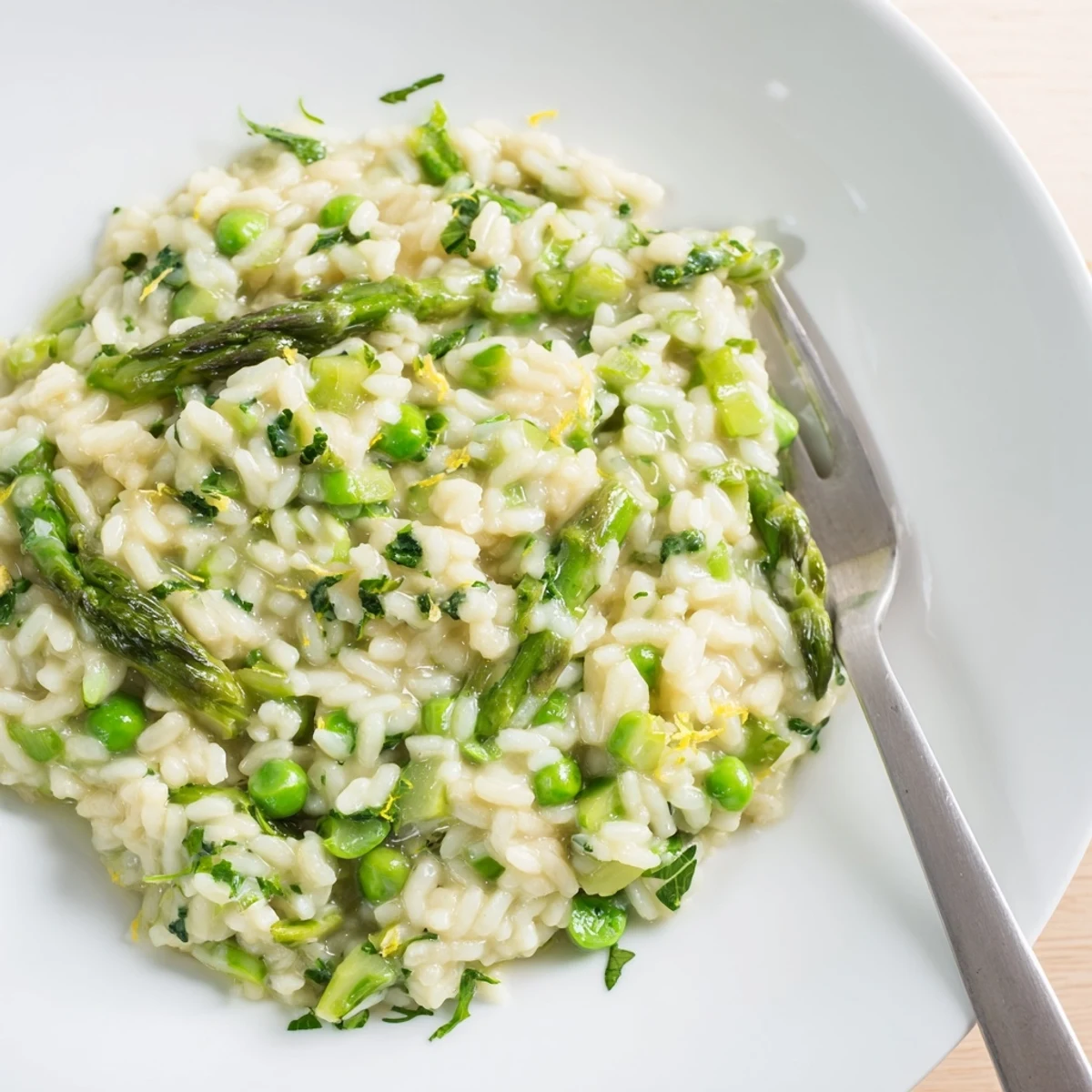
The perfect risotto should flow like a wave when you tilt the pan, not sit in a stiff mound. I learned this the hard way after making what my husband called rice with cheese sauce. Now I always stop adding broth when the grains still have a tiny white dot in the center because that last bit of resistance creates the most satisfying bite.
Choosing Your Vegetables
Fresh peas are fleeting treasures but dont let frozen ones stop you from making this dish. The key is not overcooking either vegetable because you want them to hold their shape and pop with sweetness against the creamy rice. I once used asparagus that was too thick and woody and it ruined the whole experience.
Making It Your Own
This recipe welcomes variations based on what you have or love. Ive added fresh mint instead of parsley for a completely different feel, or swapped in goat cheese for Parmesan when I wanted something tangier. The base technique stays the same while the character changes.
- Add a handful of baby spinach in the last minute for extra color
- Top with pan fried shallots for a crispy garnish
- Stir in mascarpone instead of some butter for extra richness
 Save to everydaypinmeals
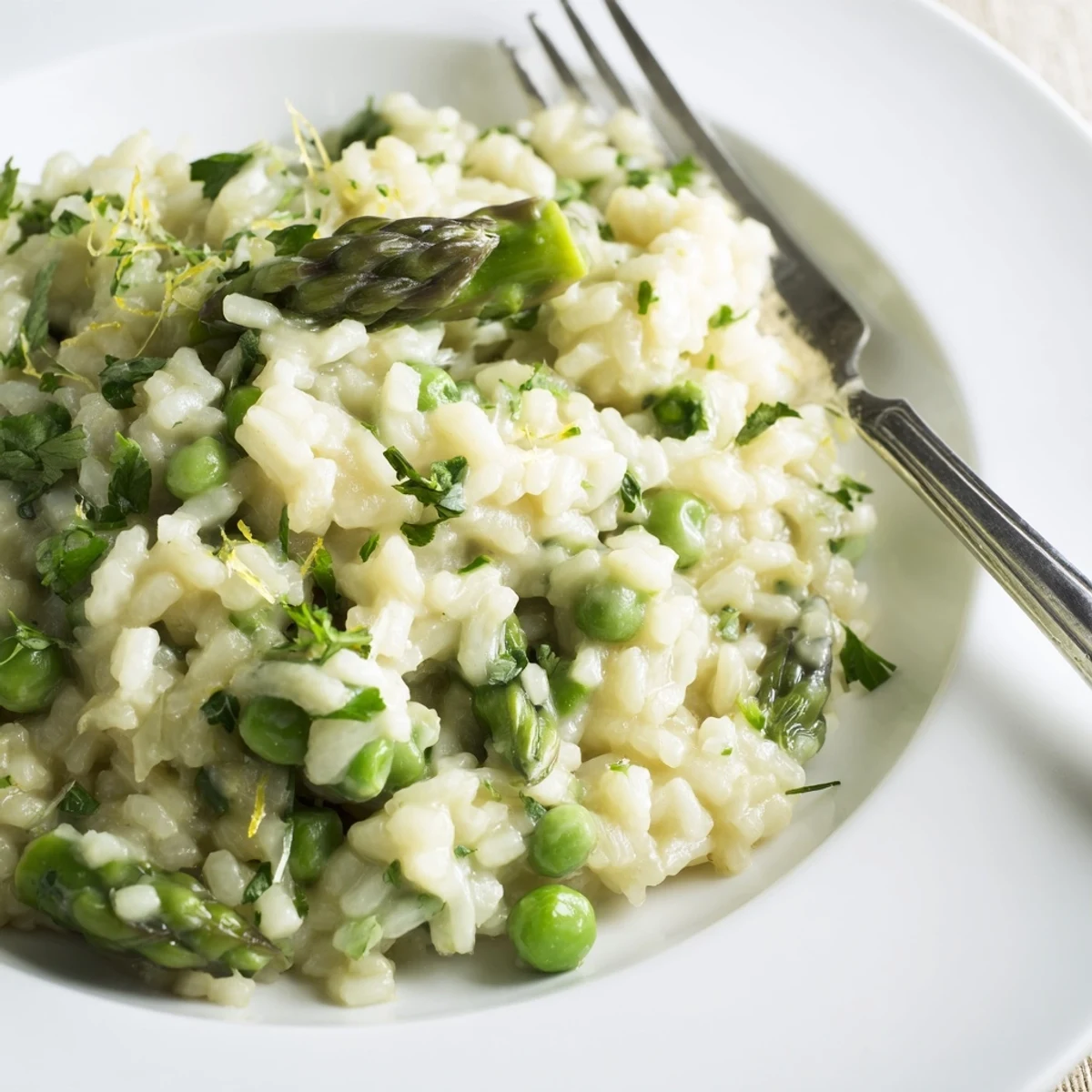
 Every time I make this risotto I remember Sarah standing in my kitchen saying trust the process. Some recipes are about feeding people and others are about sharing something of yourself. This one does both beautifully.
Recipe FAQs
- → How do I achieve a creamy texture in the risotto?
-
Slowly adding warm broth in increments and stirring gently allows the rice to release its starch, creating a creamy consistency.
- → Can I use frozen peas instead of fresh?
-
Yes, frozen peas work well and are added near the end of cooking to retain their color and sweetness.
- → What is the best way to cook asparagus for this dish?
-
Steaming or blanching asparagus for 2–3 minutes keeps it tender yet crisp and preserves its bright color.
- → Which cheese can replace Parmesan for a stronger flavor?
-
Pecorino provides a saltier and sharper alternative to Parmesan when stirred in at the end.
- → How can I make this dish vegan-friendly?
-
Use plant-based butter and a vegan cheese substitute or omit cheese entirely while retaining the cooking method.