
 Save to everydaypinmeals
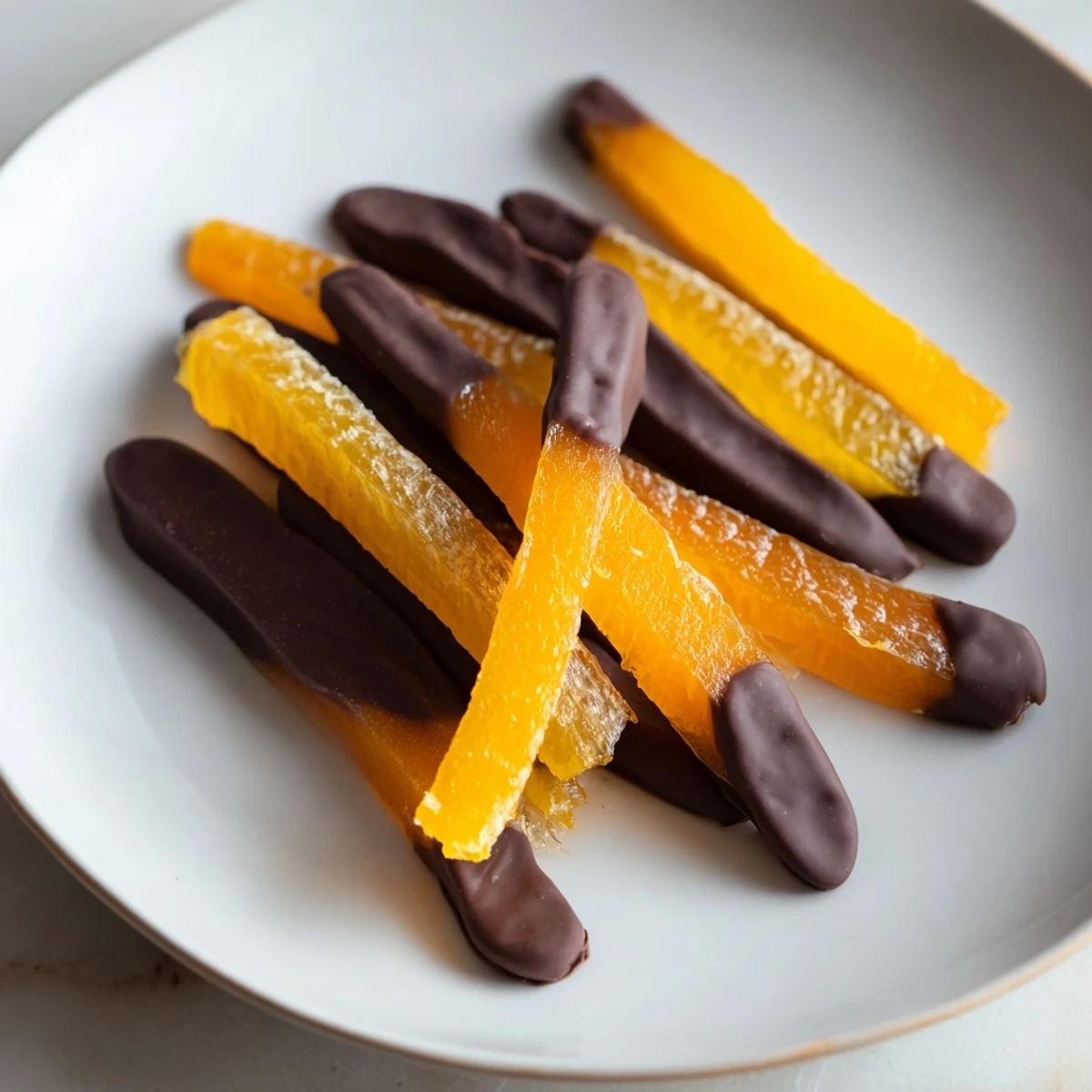
 These chocolate covered orange peels transform humble citrus rinds into an elegant treat. Orange peels are blanched multiple times to remove bitterness, then slowly simmered in sugar syrup until translucent and tender.
Once dried, each candied strip is dipped halfway into melted dark chocolate and left to set. The result is a beautiful contrast of sweet, tangy citrus and rich, slightly bitter chocolate.
A classic European confection perfect for holiday gifting, after-dinner indulgence, or pairing with espresso.
The smell of orange oil bursting from a freshly scored peel is one of those small kitchen thrills that stops me in my tracks every single time. I started making chocolate covered orange peels on a rainy Tuesday when I had three sad oranges sitting on the counter and a bar of dark chocolate I had been hoarding for no good reason. What began as a curious experiment turned into the most requested homemade gift in my circle of friends. There is something quietly magical about transforming scraps of citrus into something jewel like and irresistible.
I brought a tin of these to a dinner party once and watched a friend eat seven of them before dessert even started. She pretended she was helping me test quality control, but we both knew the truth. Now I always make a double batch because they disappear faster than anything else I set out.
Ingredients
- 3 large oranges, preferably organic: You need the peels, so organic matters more here than almost any other recipe since you are literally eating the skin.
- 2 cups (400 g) granulated sugar: This is not the time to cut back because the sugar syrup is what transforms bitter peel into translucent candy.
- 1 cup (240 ml) water: Plain tap water works fine, just enough to dissolve the sugar into a workable syrup.
- 200 g dark chocolate (60 to 70 percent cocoa), chopped: Stay in that range because anything darker overwhelms the orange and anything sweeter turns cloying.
Instructions
- Prepare the oranges:
- Wash them thoroughly under warm water, scrubbing gently. Slice off the top and bottom of each orange so it sits flat, then score the skin into four vertical sections and peel each one off in satisfying curls, taking some of the white pith with you.
- Cut into strips:
- Lay each peel flat on your cutting board and slice it into strips roughly half a centimeter wide. Try to keep them somewhat even so they cook at the same rate, but do not obsess over perfection.
- Blanch the bitterness away:
- Pile the strips into a saucepan, cover them with cold water, and bring everything to a rolling boil. Drain completely, then repeat this process two more times until the water runs clearer and that harsh bitterness softens into something mellow.
- Candy the peels:
- In a clean saucepan, stir the sugar and water together over medium heat until the sugar fully dissolves and the liquid looks clear. Drop in your blanched peels, turn the heat down to a gentle simmer, and let them swim in that syrup for 45 to 60 minutes, stirring once in a while, until they turn glassy and tender.
- Dry them out:
- Fish the peels out with tongs and spread them across a wire rack so air can circulate underneath. Leave them alone for at least two hours, though overnight is even better if you can stand the wait, until they feel tacky but not wet.
- Melt the chocolate:
- Set a heatproof bowl over a pot of barely simmering water, making sure the bottom never touches the water itself. Add the chopped chocolate and stir gently until it melts into a glossy, smooth pool that catches the light.
- Dip and finish:
- Take each peel and dunk it halfway into the chocolate, letting the extra drip back into the bowl before laying it carefully on a parchment lined tray. Let them sit at room temperature until the chocolate hardens into a clean shell, or pop the tray in the fridge if you are impatient.
- Store and share:
- Once fully set, tuck the peels into an airtight container and keep them somewhere cool and dry where they will hold beautifully for up to two weeks.
 Save to everydaypinmeals
 Somewhere between the third blanch and the first dip into melted chocolate, making these shifted from a task into a ritual for me. The kitchen fills with this warm, citrus perfume that lingers long after the last peel is tucked into its container.
Choosing the Right Chocolate
I learned the hard way that cheap chocolate ruins everything because there is nowhere to hide when you only have two ingredients. Splurge on something you would happily eat on its own and the whole batch elevates instantly.
What to Do With the Leftover Syrup
Do not pour that gorgeous orange scented syrup down the drain after candying the peels. Strain it into a jar and drizzle it over pancakes, stir it into cocktails, or sweeten your tea with a spoonful of liquid sunshine.
Serving and Gifting Ideas
These little jewels deserve a presentation that matches their charm, whether you are serving them at the end of a meal or wrapping them up as a gift.
- Pile them into a small mason jar tied with kitchen twine for an effortless homemade present.
- Serve three or four alongside a cup of espresso after dinner and watch your guests feel genuinely spoiled.
- Always tuck a note mentioning they contain soy and possible traces of milk so nobody gets caught off guard.
 Save to everydaypinmeals
 Every time I make a batch, I end up hiding a few at the back of the fridge just for myself. Some treats are worth a little selfishness.
Recipe FAQs
- → Do I need to remove all the white pith from the orange peels?
-
No, leaving a thin layer of white pith is actually desirable. It adds a pleasant slight bitterness and chewy texture that balances the sweetness of the syrup and chocolate. Just avoid thick, spongy layers of pith.
- → Why do I need to blanch the peels three times?
-
Repeated blanching is essential for removing the harsh bitterness from the orange peels. Each boiling cycle draws out more bitter compounds from the oils in the rind. Skipping this step will result in an unpleasantly bitter finished product.
- → Can I use milk or white chocolate instead of dark chocolate?
-
Yes, milk or white chocolate works beautifully if you prefer a sweeter, milder flavor. Keep in mind that white and milk chocolate are more temperamental when melting, so use gentle heat and stir frequently to avoid seizing.
- → How long do chocolate covered orange peels stay fresh?
-
Stored in an airtight container in a cool, dry place, they will keep for up to two weeks. You can also refrigerate them, but bring them to room temperature before serving for the best texture and flavor.
- → What type of oranges work best for candied peels?
-
Thick-skinned oranges like Navel or Valencia work best because they yield larger, more substantial peels. Organic oranges are strongly recommended since you are using the outer rind, which can retain pesticide residue from conventional farming.
- → Can I add other flavorings to the sugar syrup?
-
Absolutely. A cinnamon stick, vanilla bean, star anise, or a few whole cloves can be added to the simmering syrup for extra depth. Remove whole spices before dipping the peels in chocolate.